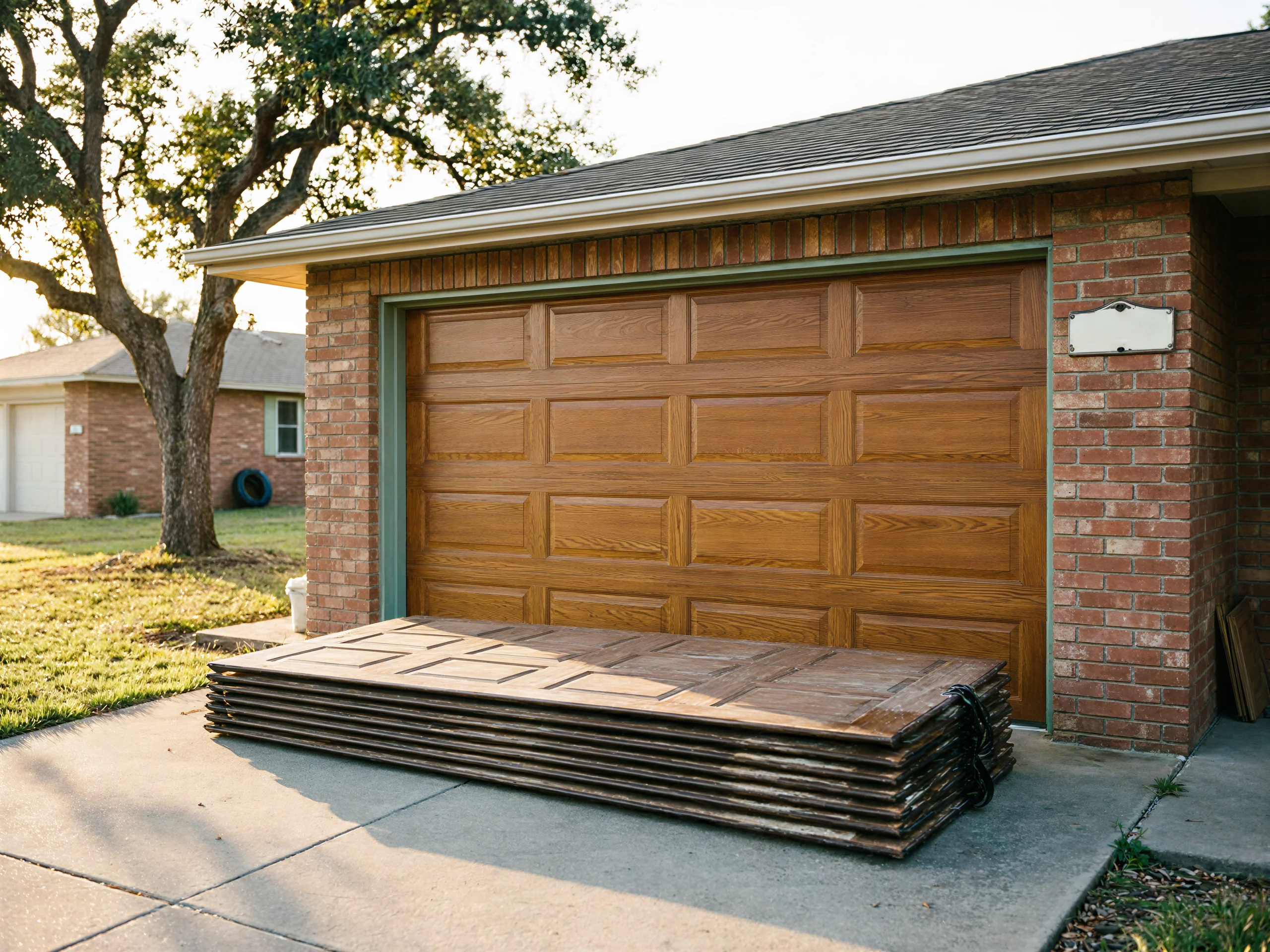
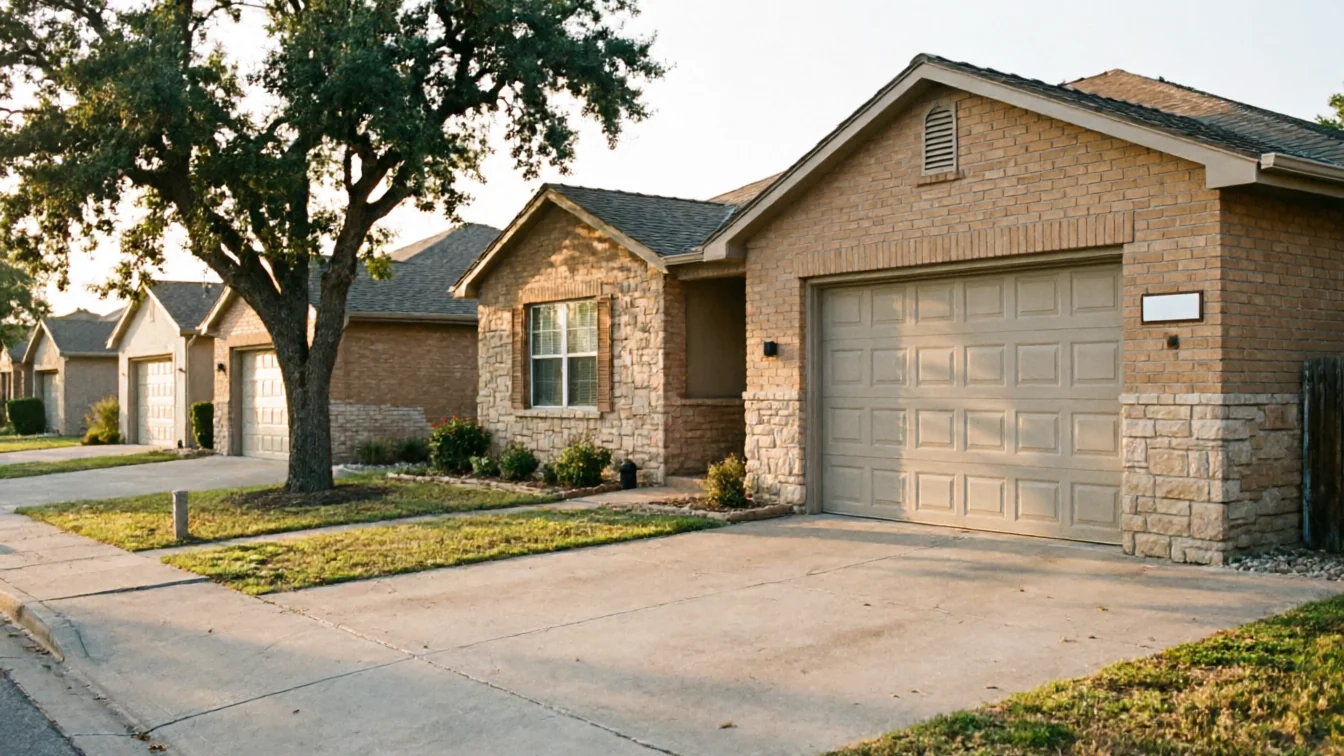
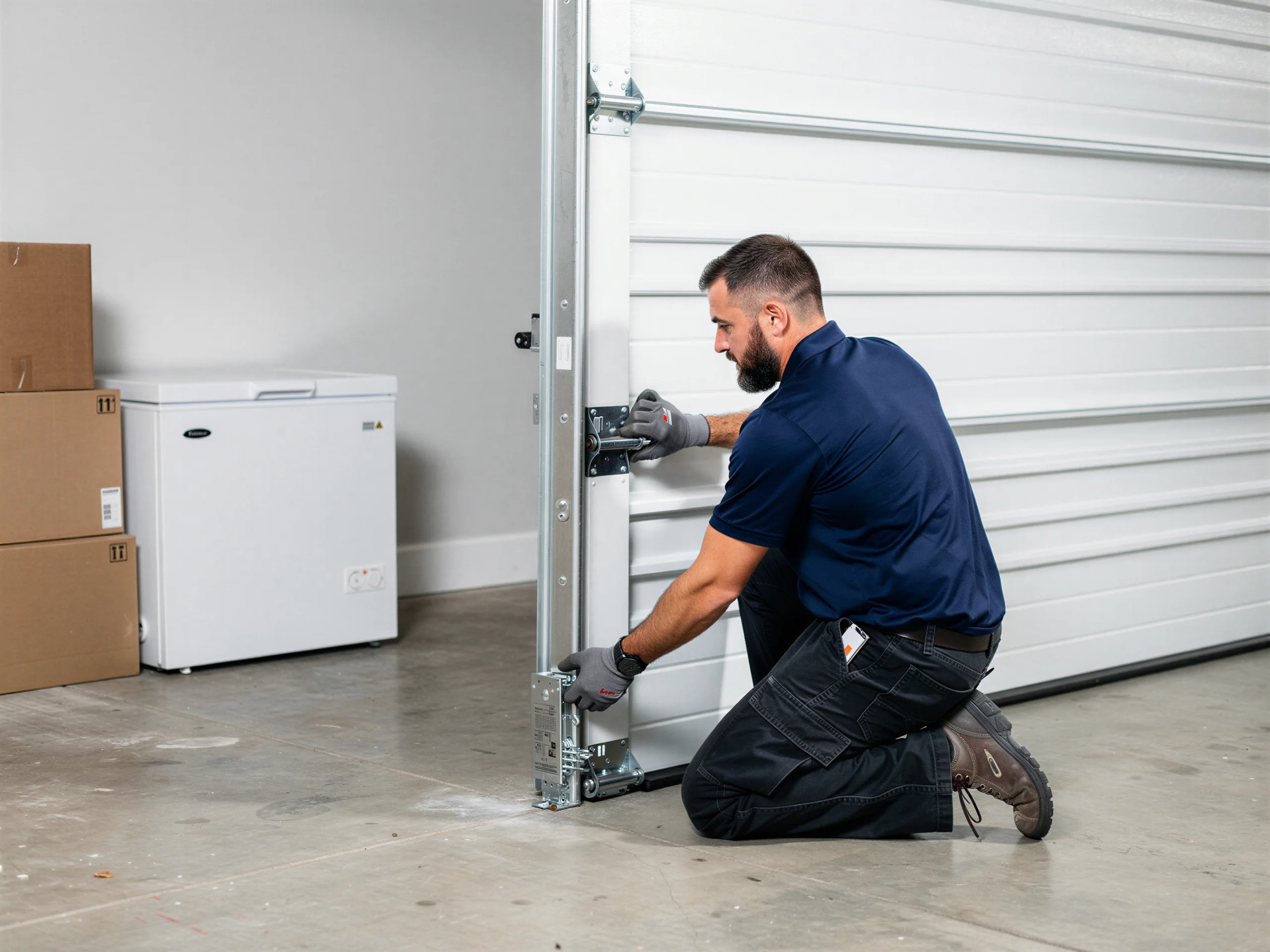
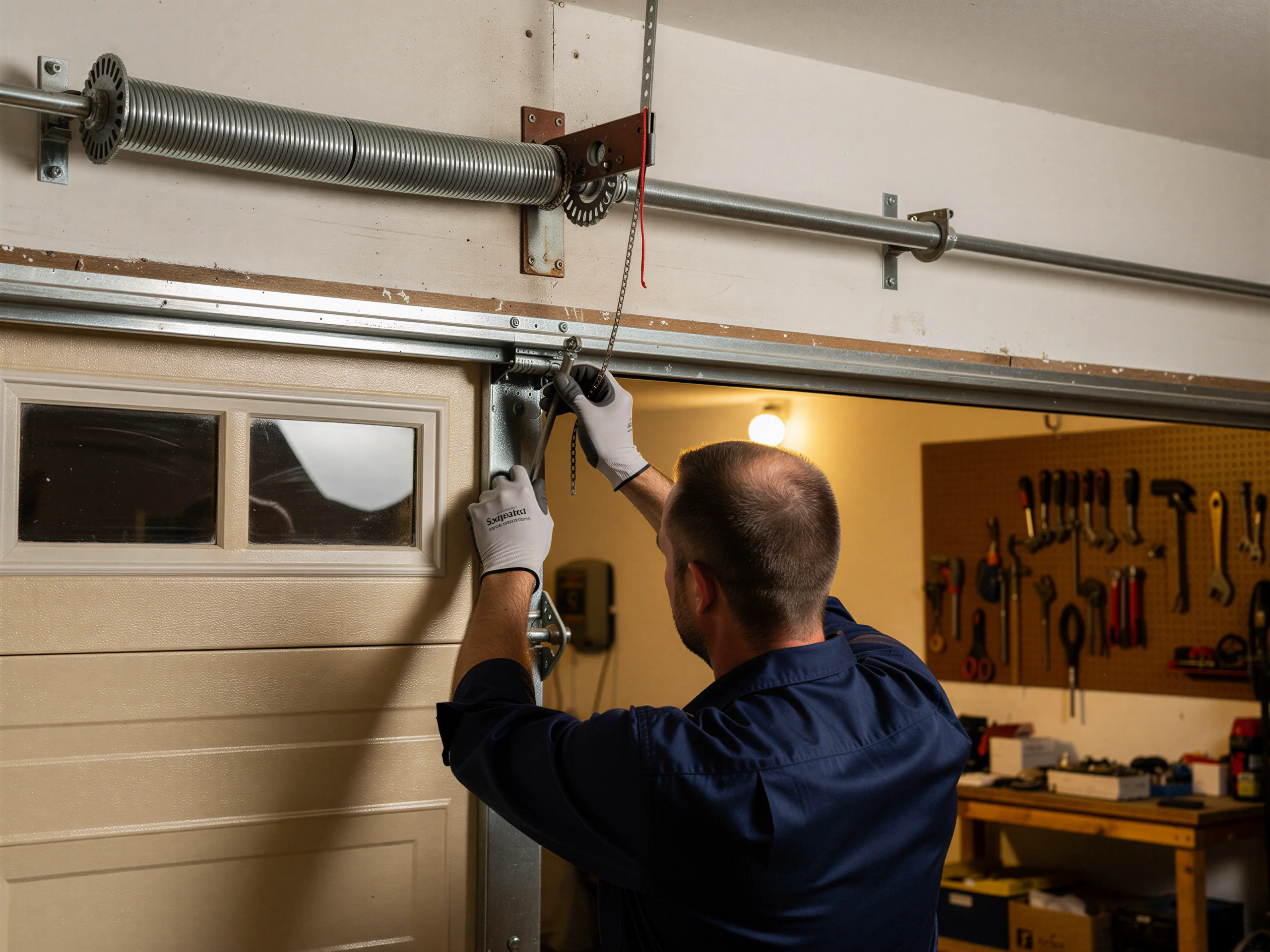
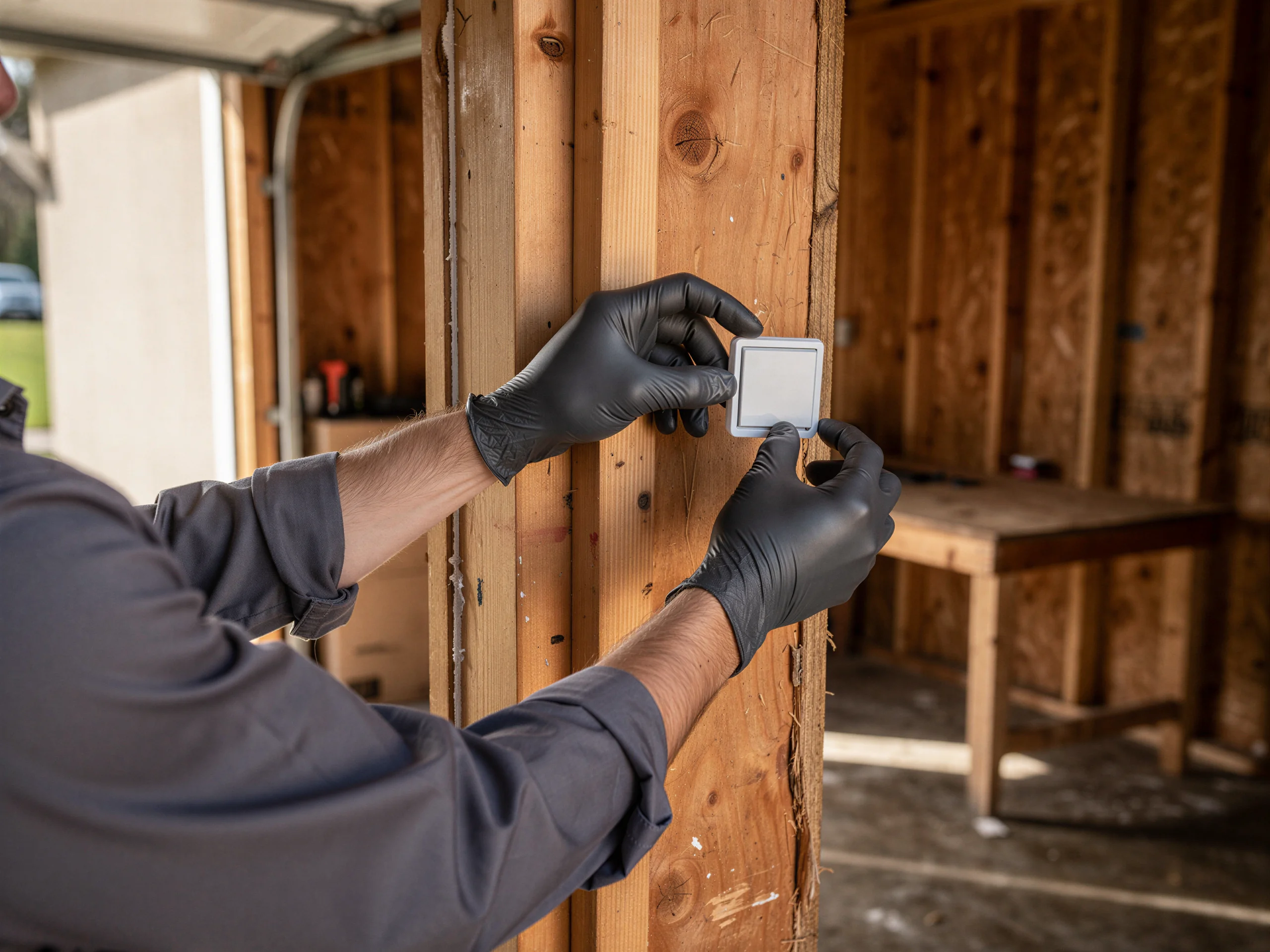
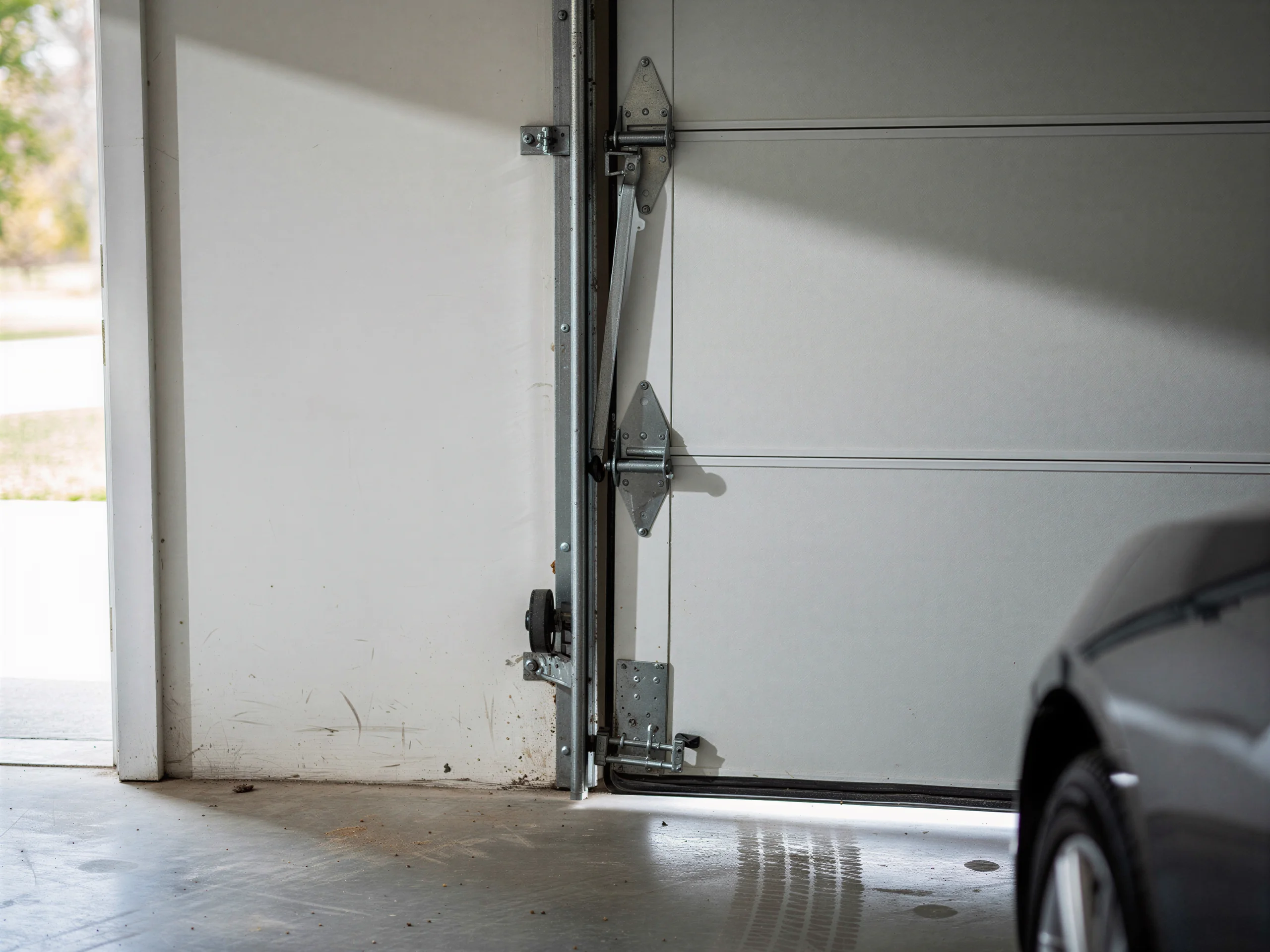
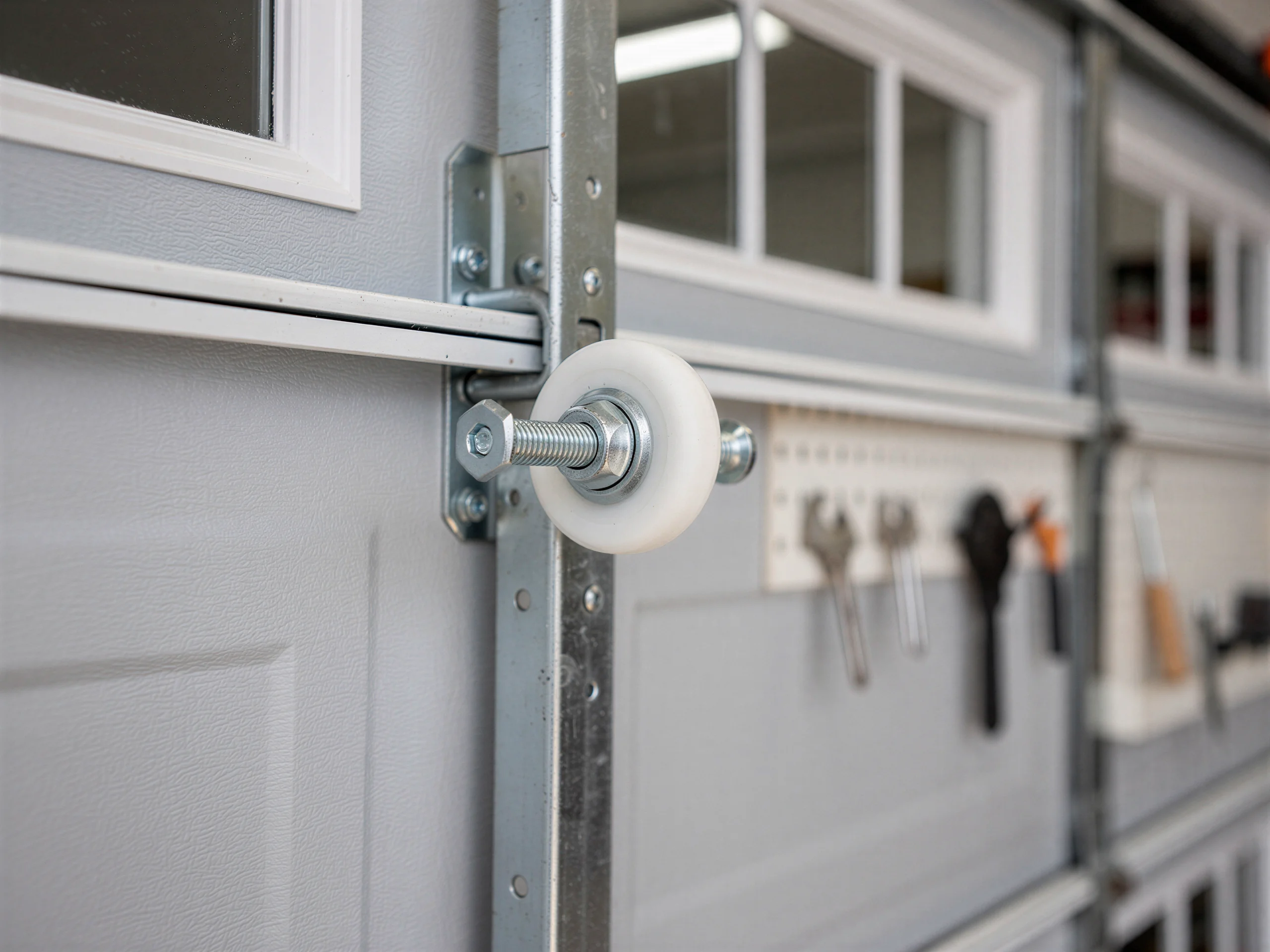
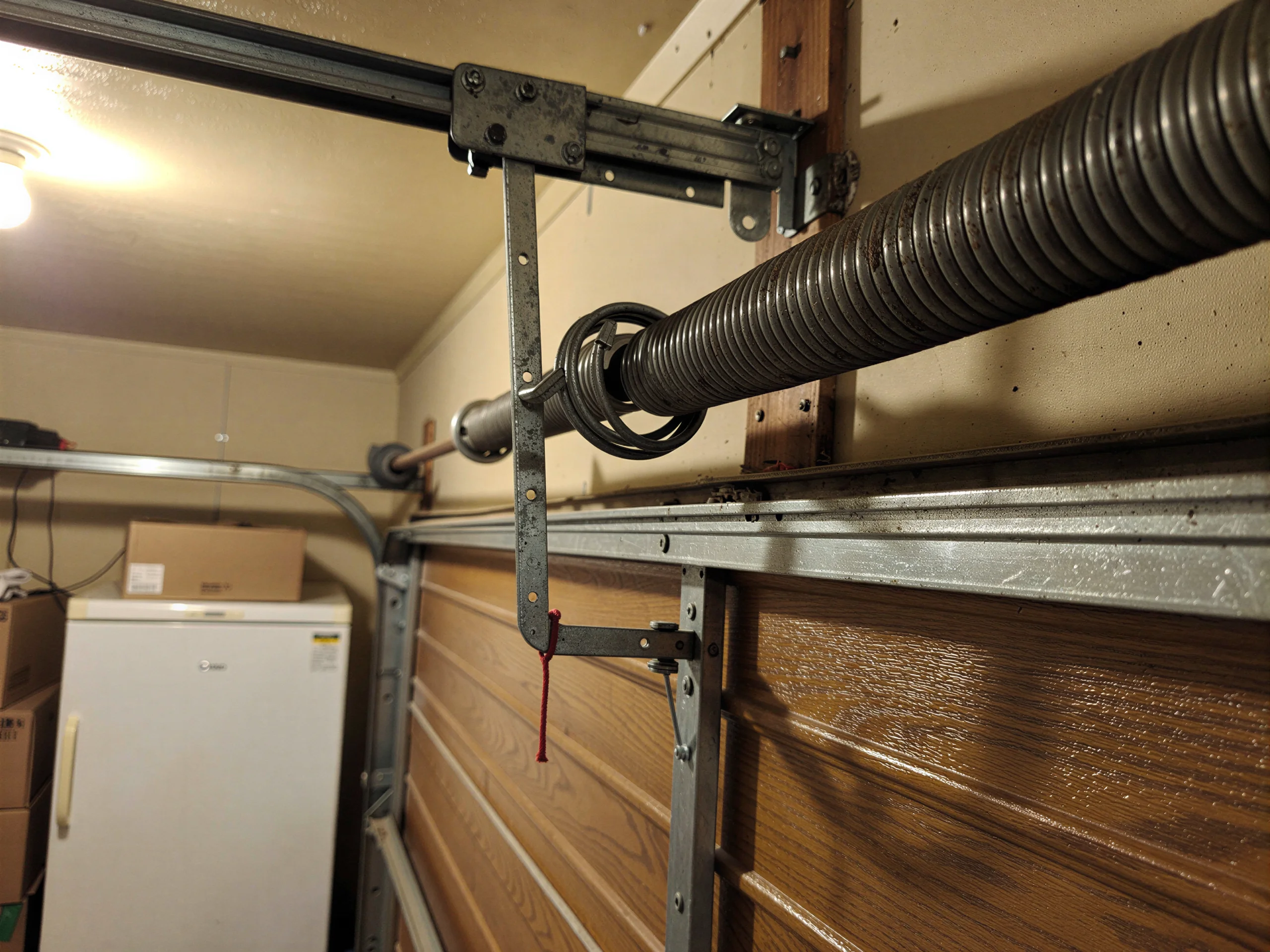
Installing a new door means pulling the old panels and track, checking the jamb and header for square and for rot or settling, and setting new track, springs, and cable sized to the door's actual weight, not a generic chart number. On houses from the 1975 to 2013 range common around Terrell, we frequently find the rough opening is fine but the original header hardware is undersized for a heavier insulated door, so we upgrade the spring and drum setup to match rather than bolt new skin onto old bones. Opener compatibility is worth checking too, since a ten or fifteen-year-old opener may not talk to a newer door's safety sensors the way it should. One honest limit: if the framing itself has shifted or the slab has settled under the opening, that's carpentry or foundation work outside a door install, and we'll say so instead of forcing a door into an opening that isn't square.