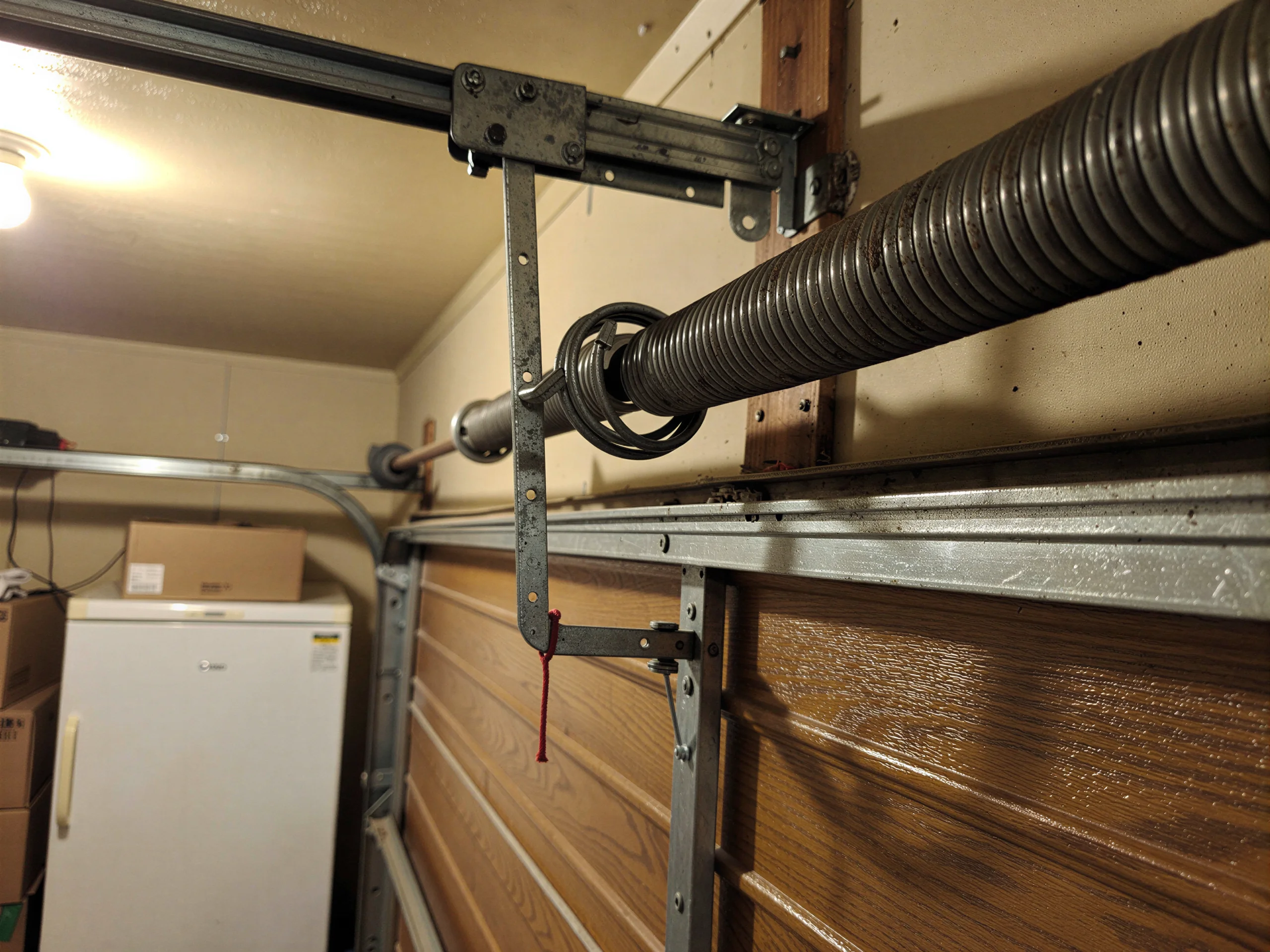
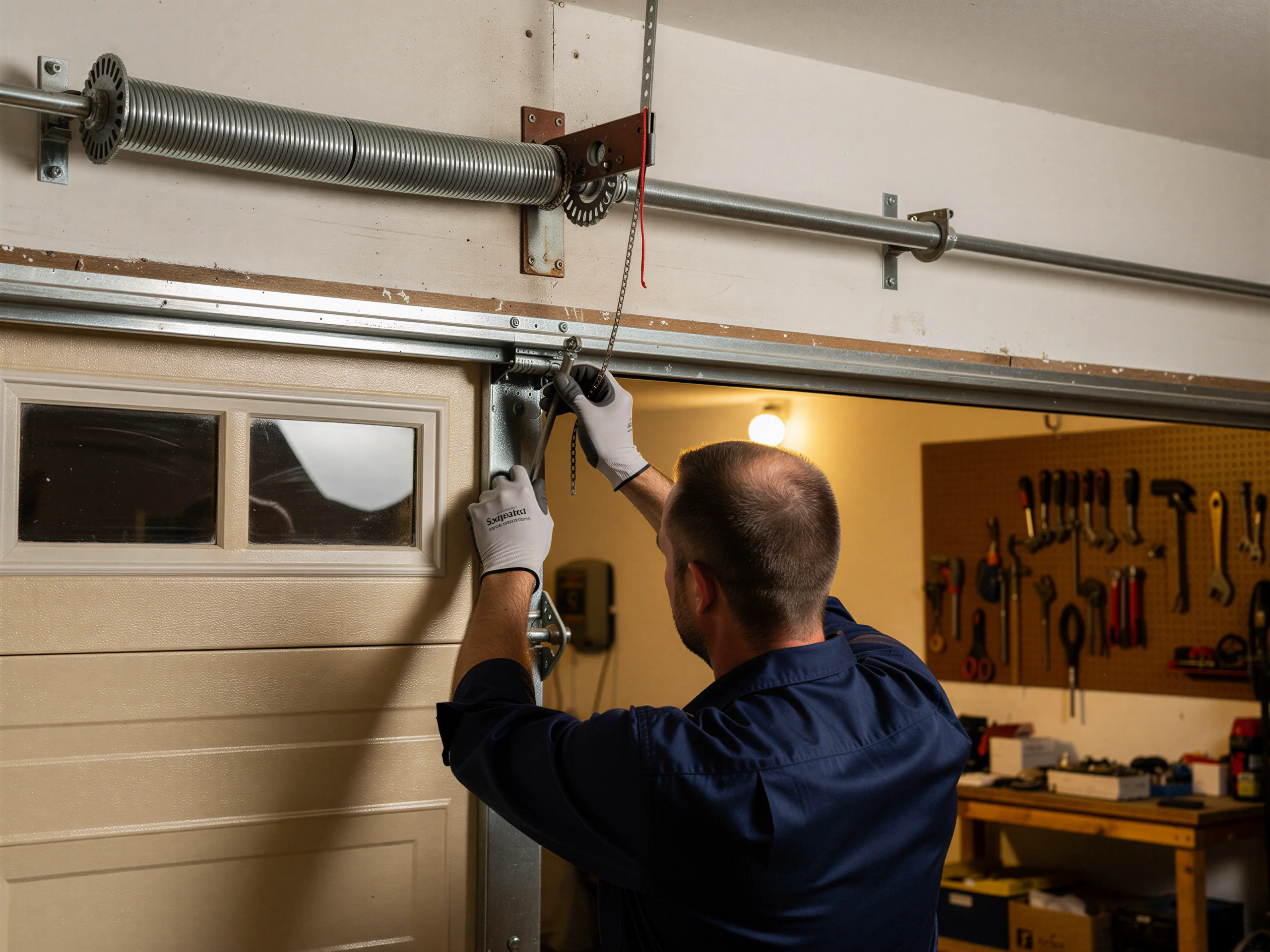
Torsion springs have a rated life measured in open-close cycles, not years, and most of the housing stock we work on across the Terrell service area went up between 1975 and 2013, with the median build year sitting right around 2000. That means a huge share of the doors out there are original equipment on houses now entering their second decade, and springs built for that era are closing in on the end of their rated cycle count. Across the 2000s-era construction that makes up most of what we cover, that failure point lands at roughly the same time for a lot of houses built in the same wave, which is why we see clusters of spring calls rather than a steady trickle.
Climate plays a part too. The area sits in a mild band that still gets the occasional freeze, and metal springs contract in cold and expand again as temperatures swing back up. That repeated flex is what finally breaks a spring that was already near the end of its life - it rarely fails on a warm, stable week. Combine an aging spring with a cold snap and the odds of a snap go up fast.
This isn't a defect in any one door. It's what happens when a lot of garage doors, installed in the same ten-to-fifteen-year window, all reach wear-out around the same time.