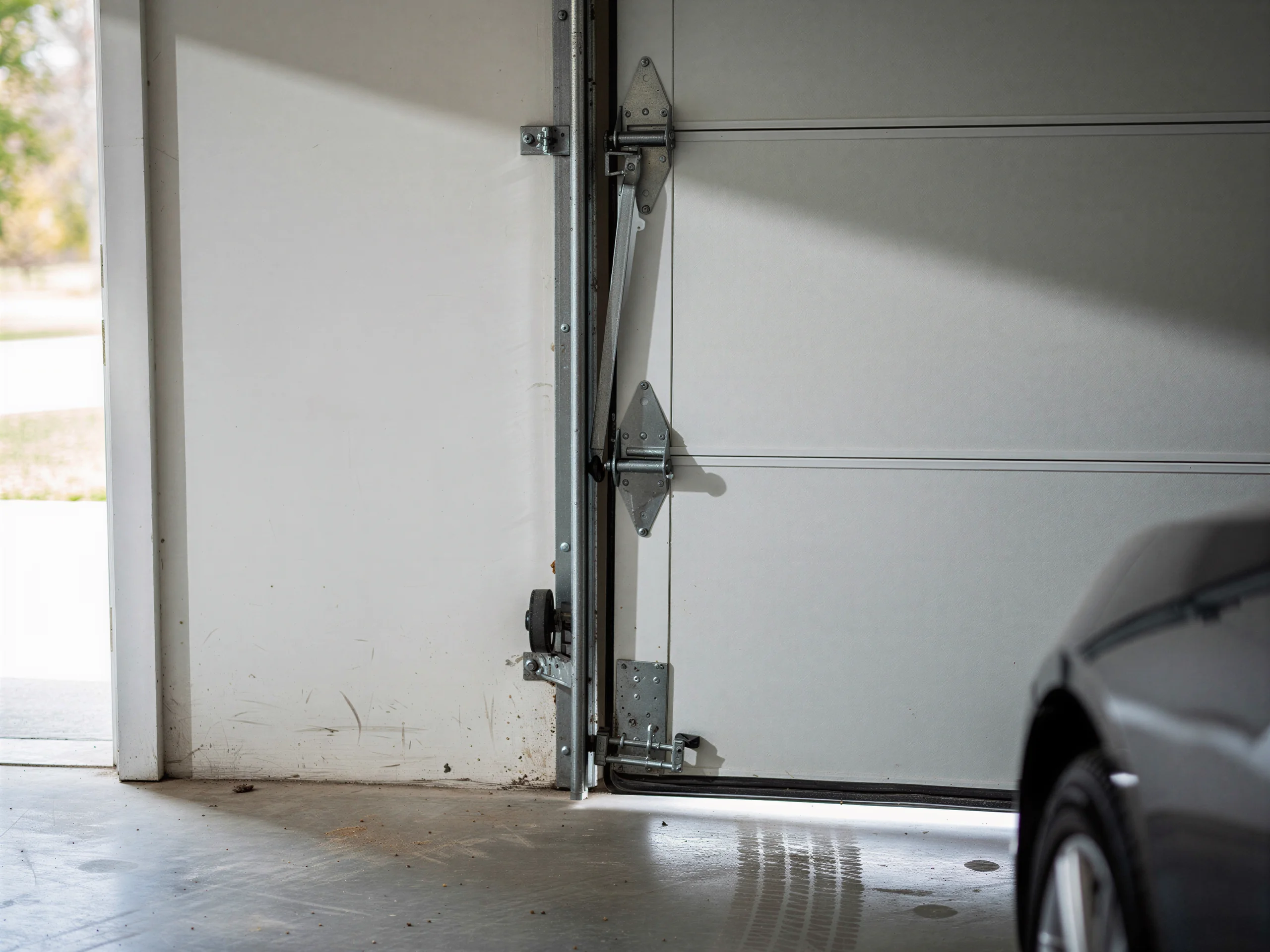
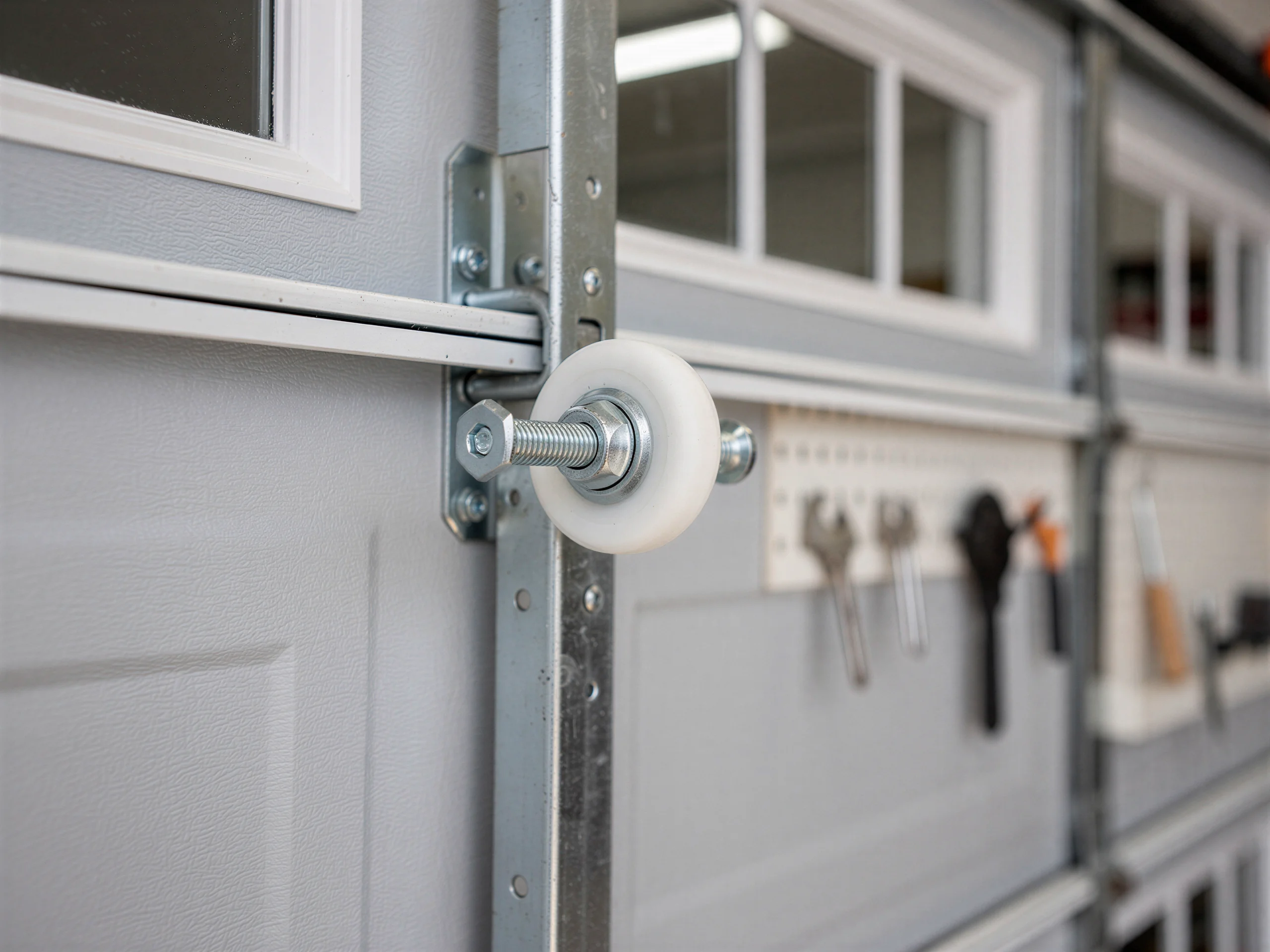
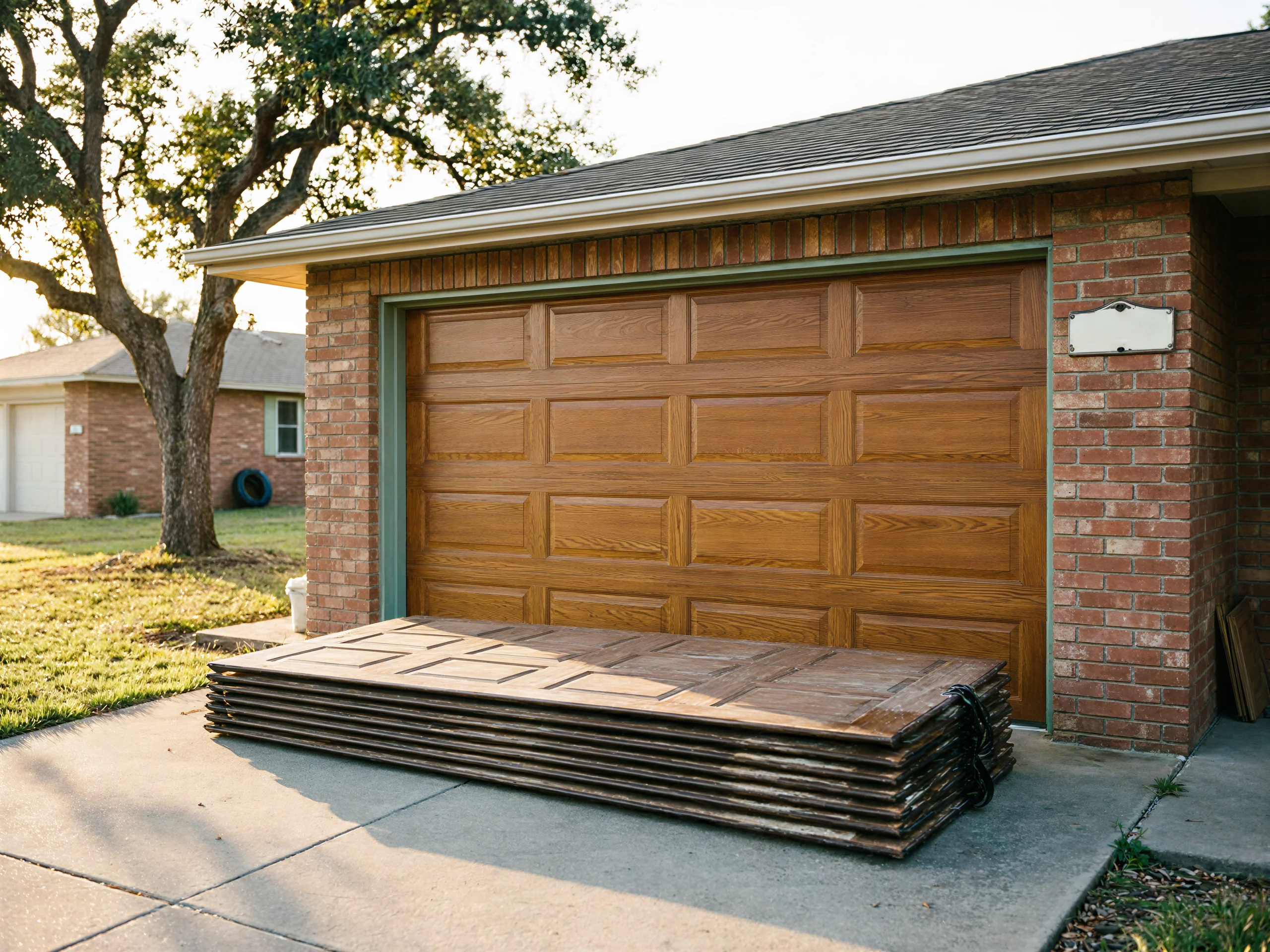
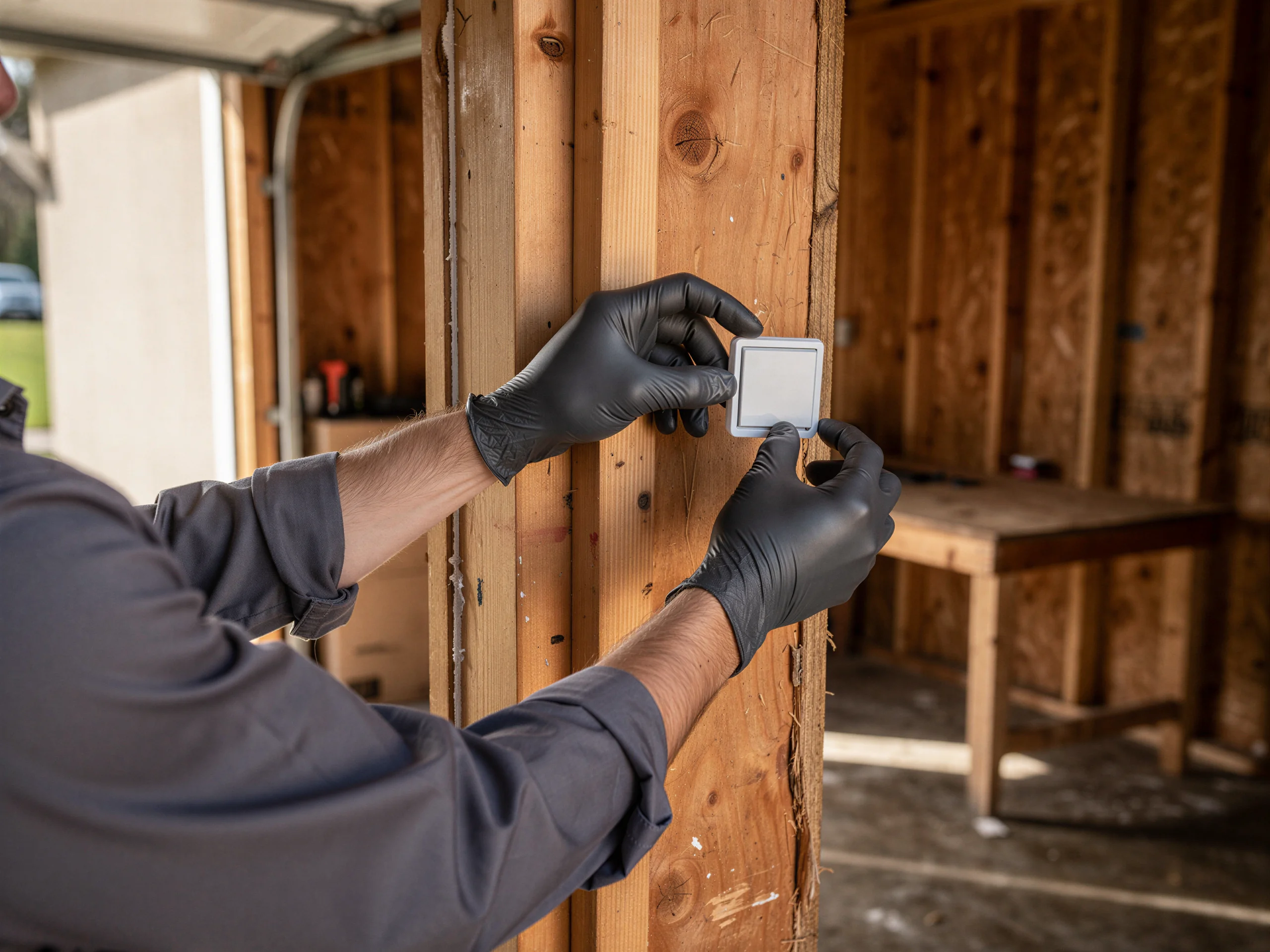
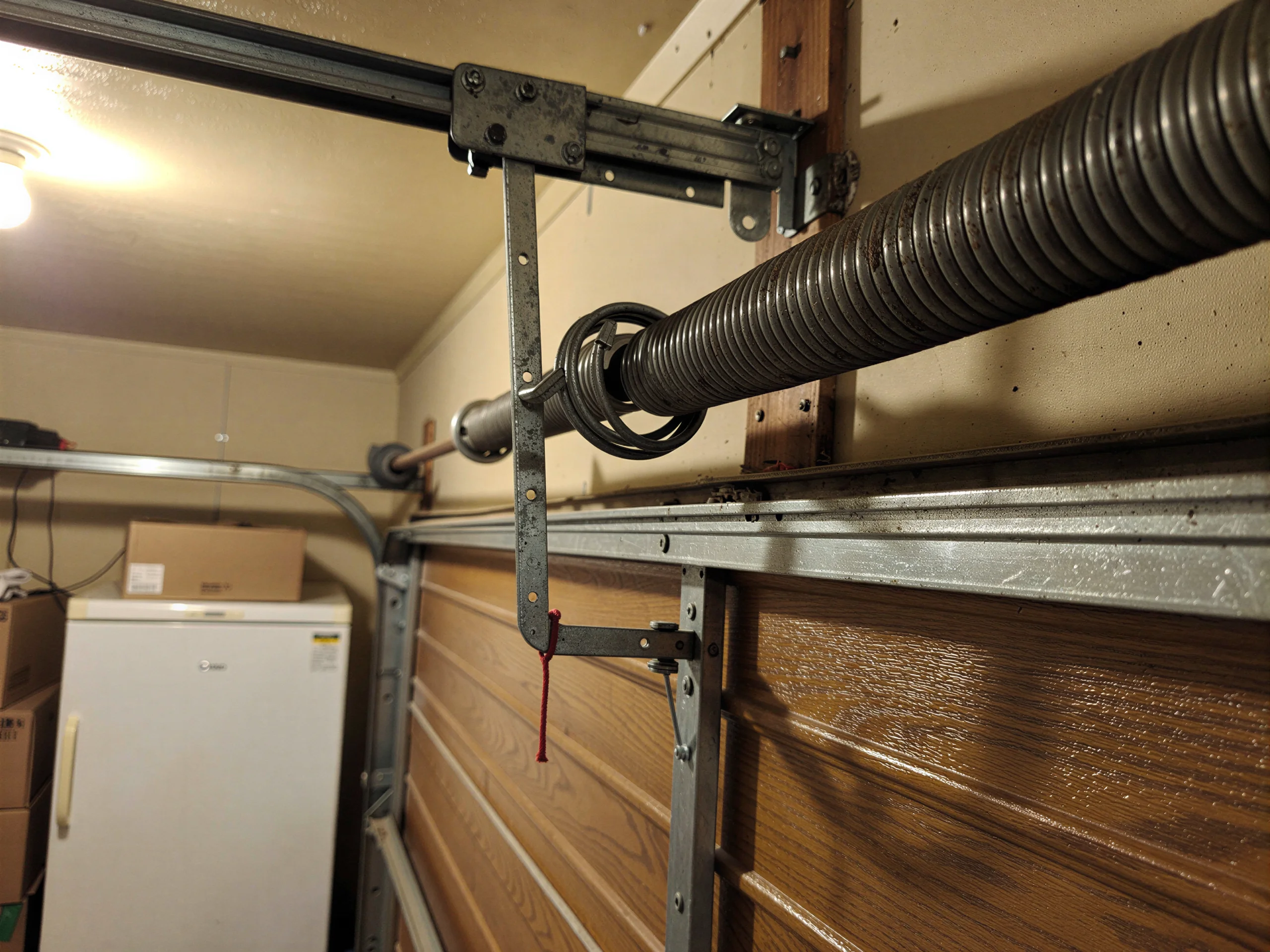
Most of the housing across this service area went up between 1975 and 2013, with the bulk of the stock dating to the 2000s. That matters for off-track doors because builder-grade track brackets from that era were fastened to the jamb with lag screws, not through-bolted, and after fifteen to twenty-five years of daily cycling those screws back out just enough for the track to flex on one side. Once the track flexes, the rollers ride the edge instead of the channel, and it only takes one hard pull on the opener or one rock caught under the bottom panel to walk the door right off.
The climate here sits in a mild band with occasional freeze, which sounds like it shouldn't matter much, but it does. A door that's already a little off-square from loose brackets tightens up when the metal contracts on a cold morning, and that's usually the day it jumps the track instead of just grinding through it. Most of the year the weather here isn't the problem - it's the one or two mornings a year where it is, hitting hardware that was already marginal.
Across the service area's 28,354 households, 21,909 of them are owner-occupied houses, and the great majority sit on that same 1975-to-2013 build curve with the same stamped-steel bracket hardware. This isn't a problem unique to one street or one subdivision - it's a hardware-age problem spread across the whole area.